Farmland
Acquires agricultural land leased to farmers, generating stable, inflation-resistant lease income and low-volatility diversification.
What is Farmland?
Farmland is among the oldest and most timeless asset classes, deeply connected to humanity’s fundamental and growing need for food. It represents a unique and increasingly popular alternative asset class, characterized by its use for agricultural functions such as crop cultivation and raising livestock. With global populations rising and productive agricultural land gradually becoming scarcer, farmland represents an opportunity to invest in a finite (and generally shrinking) and essential resource. Farmland can provide investors with the potential for stable, long-term capital appreciation driven by increasing land values, enhanced agricultural productivity, and demographic pressures. Historically, farmland has demonstrated resilience, acting as an effective hedge against inflation and economic volatility. Additionally, due to its low correlation with traditional assets such as public equities and bonds, farmland can offer significant diversification benefits, helping investors foster long-term growth and stability within diversified portfolios.
Why consider Farmland for your portfolios?

Farmland appreciation vs. inflation
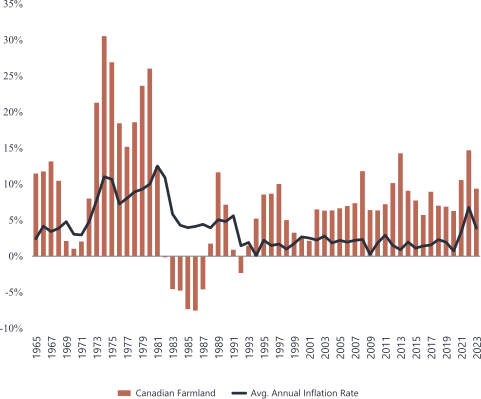 Data as of December 31, 2023. Source: Statistics Canada, Farmland Credit Canada.
Learn More About Our Farmland Strategy